The Future of Neurodiversity at Work in 2026
As we move into 2026, neurodiversity at work has shifted from the margins to the centre of serious organisational conversations. This is no longer about goodwill or workplace trends. Neurodiversity is now firmly recognised as a work health and safety (WHS) issue, a workforce sustainability concern, and a material productivity and risk management factor.
Across Australia, organisations are starting to understand what neurodivergent workers have long known, that when work is poorly designed, harm follows. Burnout, psychological injury, absenteeism and attrition are not individual failures, they are predictable outcomes of systems that were never designed for cognitive difference.
For the Neurodiverse Safe Work Initiative (NDSW), 2026 is shaping up to be a year of meaningful change. New partnerships, targeted education, practical tools and policy shifts, particularly here in Queensland are creating both opportunity and responsibility.
A Strategic Partnership That Supports How Brains Really Work
An exciting development for us in 2026 is our partnership with Focus Bear, making the premium subscription version of the app available at no cost to our coaching clients throughout the year.
Focus Bear is an Australian-designed digital support tool built specifically for people with ADHD, Autism and other neurodivergent cognitive styles. Unlike traditional productivity apps that rely on pressure, self-discipline or guilt, Focus Bear is grounded in neuroaffirming design principles that reflect how executive function actually works.
Key features include:
- Gentle structure and predictable routines
- Executive function scaffolding
- Reduced decision fatigue
- Habit-building without shame or punishment
Importantly, Focus Bear does not attempt to force neurodivergent users into neurotypical systems. Instead, it adapts to the way neurodivergent brains process information, manage energy and navigate transitions.
This partnership has been made possible through government sponsorship, signalling a growing recognition that digital cognitive supports are a legitimate part of mental health, neurodiversity, disability and workforce participation infrastructure, not optional extras.
What you get
- Complimentary premium subscription access (normally $9.99 per month) for the rest of 2026 via a link which we will send you when you connect with us here.
- A one-on-one session with Focus Bear’s creator Jeremy Nagal to demonstrate its key features and help you set it up
- Deeper and more insightful coaching experiences using the skills you develop, and habits formed by using Focus Bear, ensuring it supports safety, not pressure.
2026 Neurodiversity at Work Complimentary Webinar Series
In 2026, we will deliver a new webinar series that sits at the intersection of neurodiversity, WHS, systems design and lived experience. These sessions are designed for leaders, practitioners, organisations and individuals navigating real-world complexity.
Women at Work – Menopause, Mental Health, Neurodiversity and More
Neurodivergent women are often diagnosed late in life rather than in childhood, chronic masking, burnout, menopause-related cognitive changes and disproportionate caring responsibilities and co-morbid mental health conditions can complicate the diagnostic landscape and lived experience. Traditional WHS and HR frameworks were not designed with these layered risks in mind. This series will explore what psychologically safe work genuinely looks like for women whose brains do not match the default model.
ADHD Tax – the hidden challenge of financial management in neurodiversity
Employment precarity, under-employment, impulsivity, executive dysfunction, dyscalculia and financial trauma intersect powerfully for many neurodivergent workers. In this webinar we will discuss why it can be so challenging for many neurodivergent people to manage their financial affairs, and why so often traditional approaches to providing financial management advice to neurodivergent clients are ineffective. We’ll meet a AuDHD Financial Advisor who is providing tailored Financial Management Services specifically to accommodate the different ways that neurodivergent individuals think and function. He describes financial stress as a personal risk factor, not a lack of financial knowledge or competency, and explores why financial wellbeing cannot be separated from personal safety, mental health or performance.
Focus Bear – The App that’s changing the lives of neurodivergent people
This webinar explains the science behind Focus Bear and why it is a game change for neurodivergent individuals who struggle with executive functioning, focus, motivation, establishing and maintaining healthy routines and sleep. We’ll focus on the practical implementation of techniques using Focus Bear as a scaffold that reduces cognitive load and burnout, rather than another tool people feel they are “failing at”.
The Colour of Music – Neurodivergence, Creativity and Synaesthesia
This webinar will explore synaesthesia, through the lived experience of a renowned, award-winning musician. In this conversation we will discuss how synaesthesia and neurodivergence shape the way neurodivergent people experience sound, colour and emotion and how this can influence creativity, health and working life.
Alongside the extraordinary creative strengths synaesthesia can bring, we’ll also discuss the challenges, including sensory overload, fatigue and navigating workplaces not designed for multi-sensory processing. Importantly, this is not an inspiration story. It is a grounded discussion about living and working safely with a different sensory reality, and how unrecognised sensory differences can become invisible workplace risks.
Neurodiversity Celebration Week 16 – 22 March 2026
Neurodiversity Celebration Week is now a global initiative that aims to change how neurodivergent individuals are perceived and supported by challenging unconscious bias, misinformation and stereotypes about neurodivergent individuals. It provides schools, universities, employers and individuals with resources and opportunities to recognise the many talents of people who experience life differently.
Find out more, register for events and download resources here and watch this space for more information about the contributions NDSW will be making to this important event.
Policy Change in Queensland – Progress With Responsibility
Recent reforms allowing GPs in Queensland to diagnose and treat ADHD in adults represent an important step forward and promises reduced costs for diagnosis, shorter wait times and fewer barriers to care which will make diagnosis and care more accessible.
However, these reforms also carry risks:
- Many GPs have limited training in the diagnosis and treatment of ADHD in adults, particularly in women;
- ADHD rarely exists in isolation. Trauma, other neurotypes like autism and dyslexia, mental health conditions such as anxiety and depression often coexist, complicating the diagnostic process; and
- A narrow medical-model focus can lead to medication only management without adequate psychosocial or workplace support.
Diagnosis, while important does not make the individual or their work safe.
What does keep neurodivergent workers safe is an understanding of their unique neurodivergent profile, where there key strengths and challenges lie and how the design of their work and work environment either helps or hinders them. Only with this knowledge can employers and workers collaborate to identify and utilise the controls that help.
The point of this is, that a fundamental principle of WHS, ergonomic and human factors, is that human bodies cannot easily flex and adapt to fit the equipment they work with or the environment they work within. Forcing a worker to work in such a way will invariably lead to harm.
To keep workers safe, we must design the plant, tools and equipment to fit the size and shape of their bodies and how they are meant to work. In the same way, neurodivergent workers cannot change the way they function to fit in with a workplace culture, systems and work processes that are designed around neurotypical functioning.
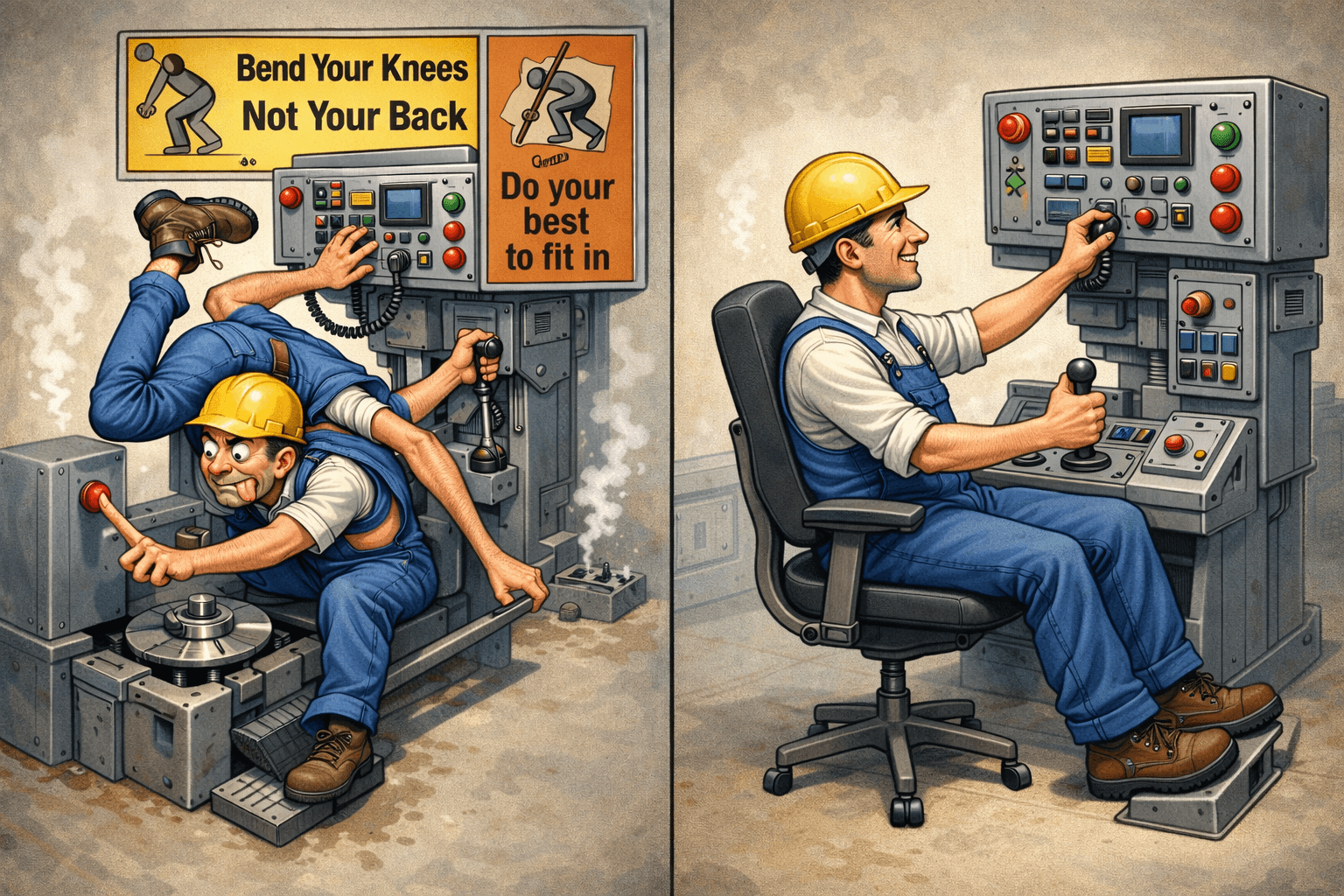
When work is poorly designed, people are forced to contort themselves to fit the task; when work is designed well, the task fits the person, illustrating the fundamental principle of ergonomics and safe work design.
How can the Neurodiversity Workplace Profiler help?
The Neurodiversity Workplace Profiler complements an individual’s diagnosis by mapping out their unique neurodivergent traits and characteristics which then informs their coaching and support needs.
With a strong evidence base of more than 20 years of multidisciplinary clinical research in neurodiversity, it has been designed to take a person-centred approach to analyse the person’s overall strengths and challenges across a range of cognitive areas as well as considering the user’s wellbeing.
You don’t need to have a formal diagnosis to be able to access the Neurodiversity Workplace Profiler. You don’t even have to identify as neurodivergent. It’s enough to be curious about what makes you tick.
It can be used by workers and employers to understand how workers think and function and help them to identify adjustments that would create the right environment for the neurodivergent worker to perform work safely.
Get in touch today to find out more.
The Global Picture – Withdrawal of DEI Initiatives and the Enduring Power of WHS
Globally, some jurisdictions are retreating from explicit DEI language, and worse, dismantling “woke” DEI programs and firing DEI workers. I haven’t seen this trend in Australia yet, thank goodness.
But one obligation remains immovable, the employer’s primary duty of care under WHS legislation. Diversity programs can be dismantled. Legal safety obligations cannot.
It is estimated that 15 – 20% of the global population is neurodivergent and 65% of these are of working age. That’s roughly 10% of the workforce, and in some industries such as IT, engineering and construction that proportion may be as high as 50% of the workforce.
The risks already exist.
This does not mean that the neurodivergent worker is the hazard in the workplace.
It means that the neurodivergent worker thinks, learns, communicates, regulates attention and emotion, perceives and responds to risk and experiences the physical environment differently from neurotypical workforce. If the organisation’s business processes, systems and culture have been designed around neurotypical functioning, then the will always exclude, fail to identify and manage risk, and even introduce new risks for neurodivergent workers.
Ignoring these risks does not remove liability. It simply shifts the cost onto workers, systems and, ultimately, organisations.
Looking Ahead to 2026
The year ahead demands deeper, more honest conversations about neurodiversity at work, conversations grounded in design, systems and accountability rather than awareness alone.
At NDSW, the principles remain clear:
- Neurodivergent functioning is not a deficit
- Safe work must be designed for real humans
- Inclusion is not optional, it is a WHS responsibility
If you are a current coaching client, we will be in touch soon with more details about Focus Bear access. If you are not and you have been thinking “maybe later”, later is now! There’s never been a better time.